Ambient Coolers
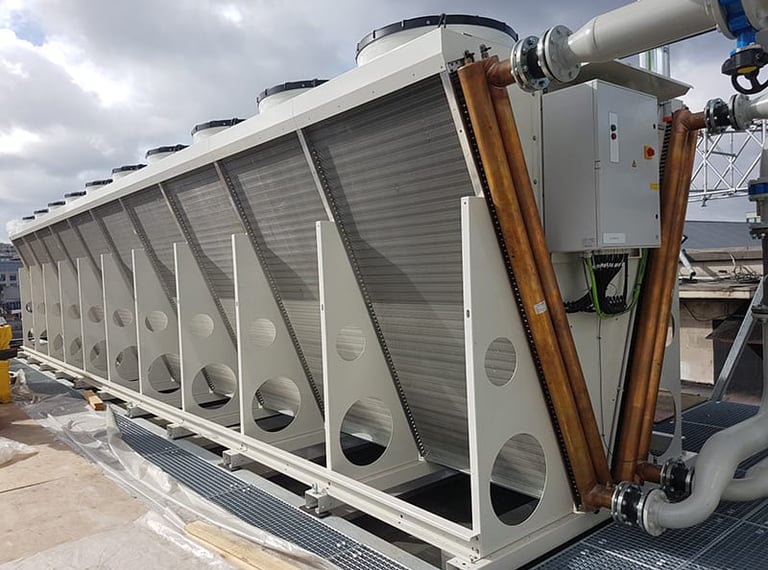
Ambient coolers, often referred to as free‑cooling systems, use naturally cold outdoor air to support or replace mechanical refrigeration. By taking advantage of lower ambient temperatures, these systems deliver efficient cooling with significantly reduced electrical demand. For businesses looking to improve sustainability and cut operating costs, ambient cooling offers a smart, future‑focused solution that integrates seamlessly with existing chilled‑water infrastructure.
Utilising ambient conditions for optimised performance
When outdoor temperatures drop below your return‑water setpoint, the ambient cooler takes over the cooling load, reducing or even eliminating the need for the chiller to run. With V‑type or flat‑bed horizontal configurations, smart control panels, and integrated air thermostats, these systems are engineered for reliability and long‑term performance. They can be retrofitted to most chilled‑water systems, making them a practical upgrade for sites aiming to reduce energy consumption without major plant changes.
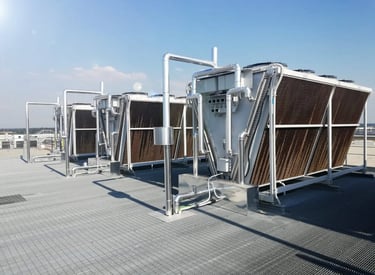
Delivering long‑term energy savings with minimal intervention
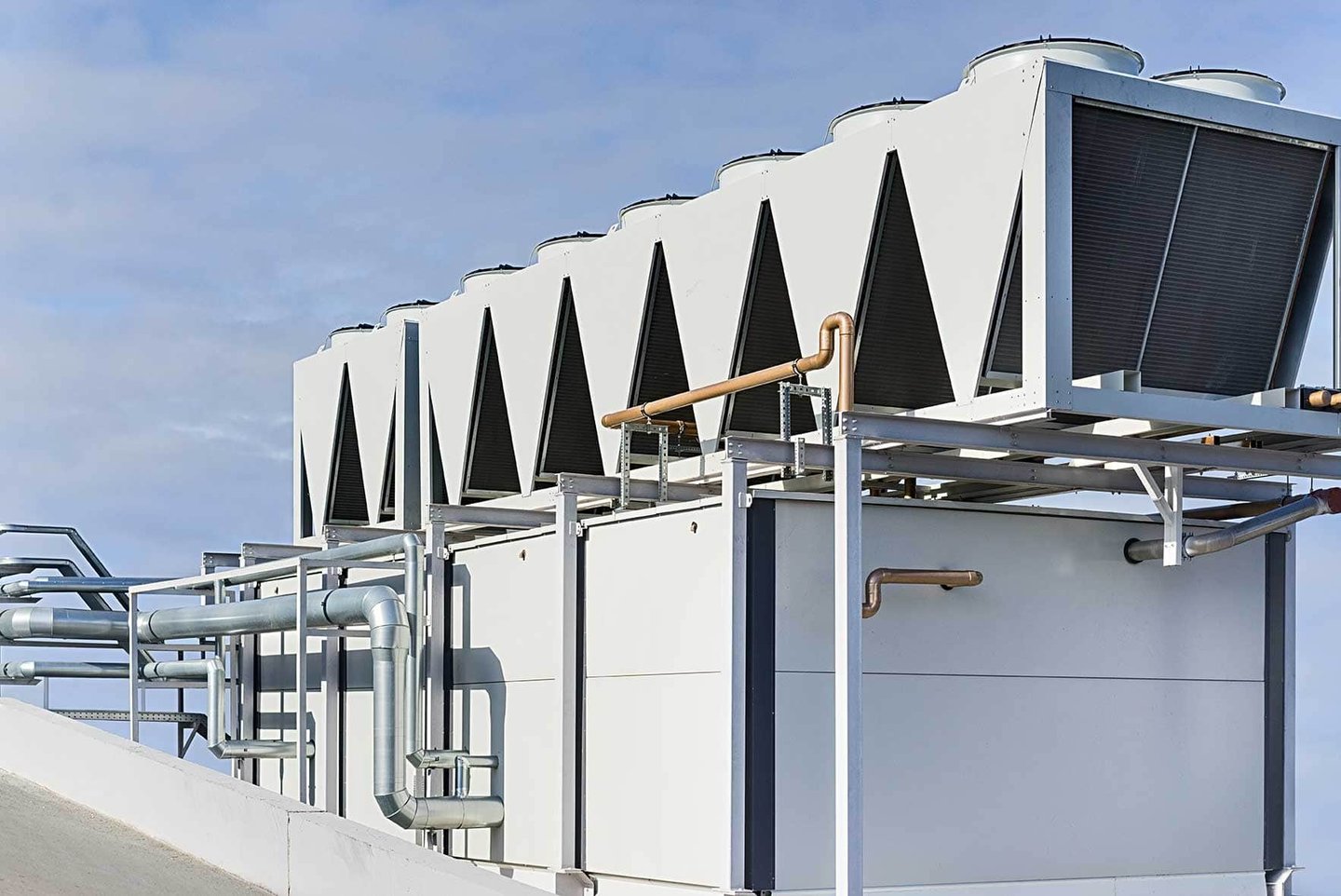
The long‑term savings are substantial. From around 12°C and below, ambient coolers can deliver huge reductions in electrical consumption, often providing annual savings that continue for 10–15 years. By reducing chiller runtime, they also extend equipment life, lower maintenance demands, and support greener, more efficient operation across your entire cooling system.
Maximizing efficiency by reducing chiller load
Dry Air
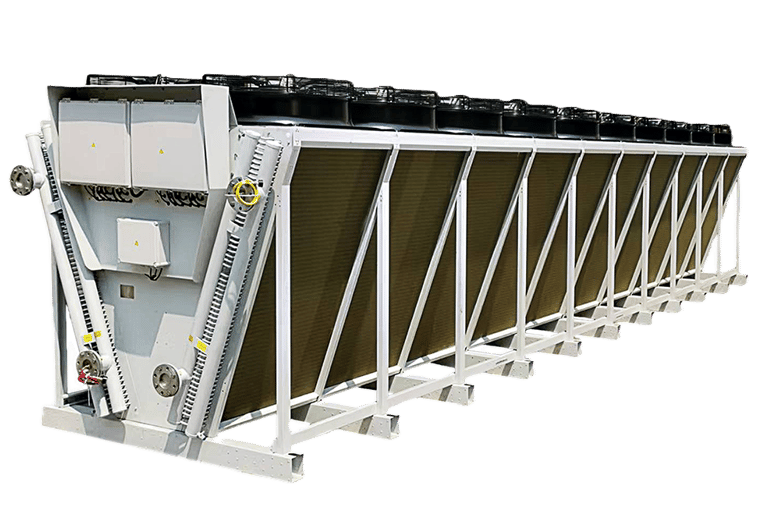
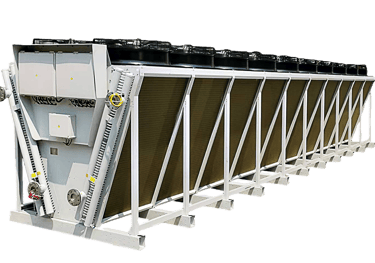
Dry Air vs Evaporative
Evaporative
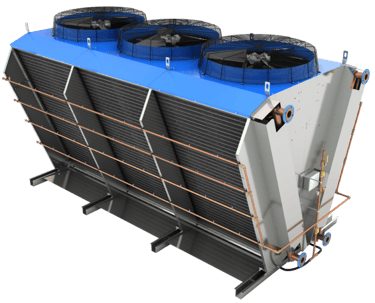
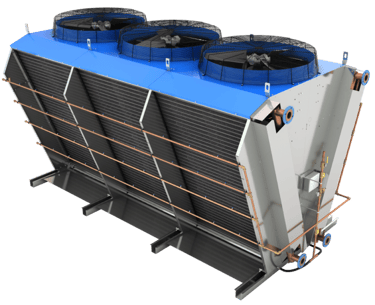
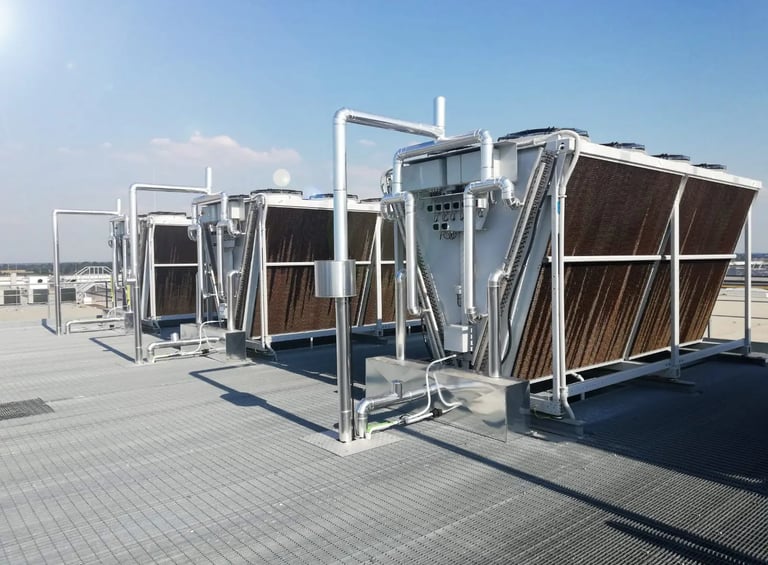
Dry air coolers provide efficient heat rejection by using ambient air to cool process fluids without the need for water. Their simple, closed‑loop design makes them highly reliable, low‑maintenance, and ideal for sites where water use is restricted or costly. With no evaporative losses, no water treatment requirements, and minimal mechanical complexity, dry coolers offer a clean, dependable solution that delivers stable performance year‑round.
Evaporative (adiabatic) coolers enhance cooling capacity by pre‑cooling the incoming air with a controlled water mist, allowing the system to achieve lower fluid temperatures even in warmer conditions. This approach significantly boosts efficiency, reduces electrical consumption, and supports smaller footprint designs compared to traditional mechanical refrigeration. Because the adiabatic function only activates when needed, these systems balance strong performance with responsible water use, making them a smart choice for energy‑conscious operations.
Chillers
CRAC & Downflow AC
Heat Recovery Systems
Related applications:
Email: service@foxrefrigeration.com
© Fox Refrigeration Ltd. 2024. All Rights Reserved

Registration Number: 15743091
Need Assistance?
Commercial Refrigeration, Air Conditioning and HVAC services across North West England and North Wales.
24‑hour breakdown support available.
Tel: 08009704929
North West England, North Wales, Nationwide support available